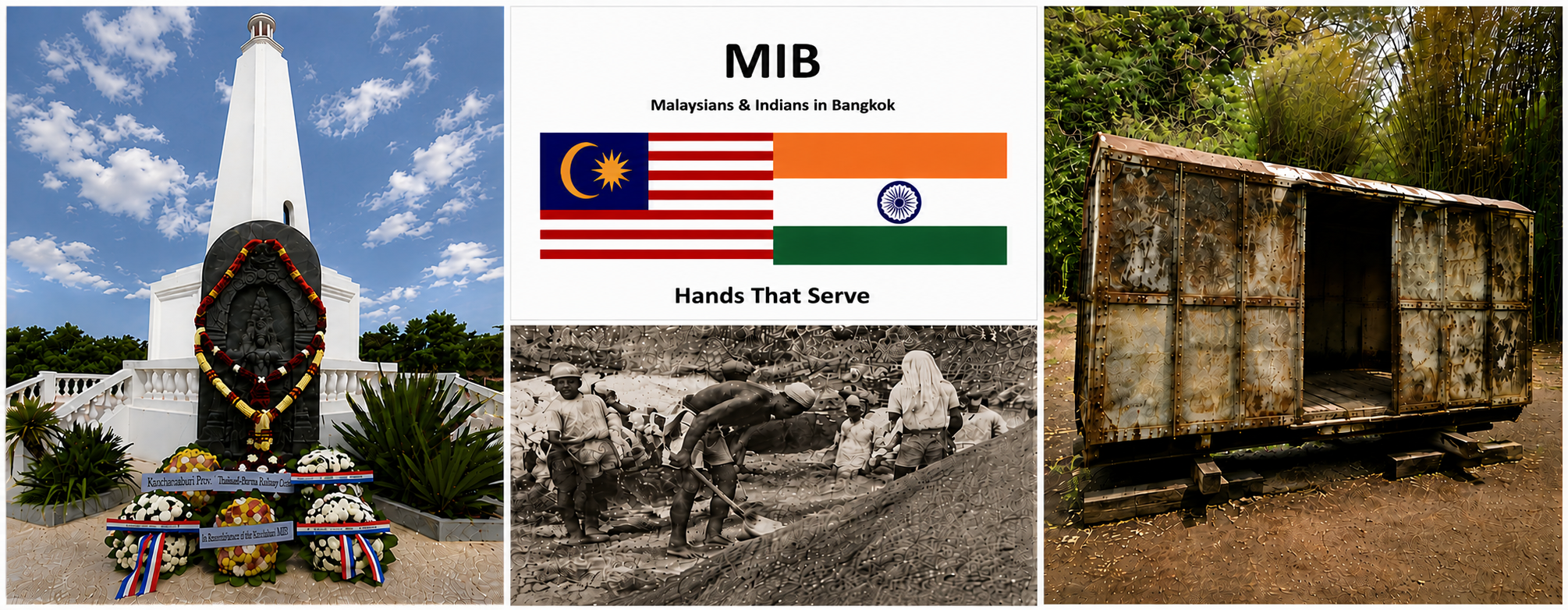
The Royal Netherlands Embassy and
the Chedi-Nadukal Pairing
On 15 August 2026, the 81st anniversary of the end of the Second World War in Asia, the Embassy of the Kingdom of the Netherlands in Thailand took part in its annual commemoration at Kanchanaburi. The Embassy’s participation was significant not only because of the longstanding Dutch connection with the Thai–Burma Railway, but also because it represented an important development in an involvement with the Chedi-Nadukal Pairing that had begun more than two years earlier.
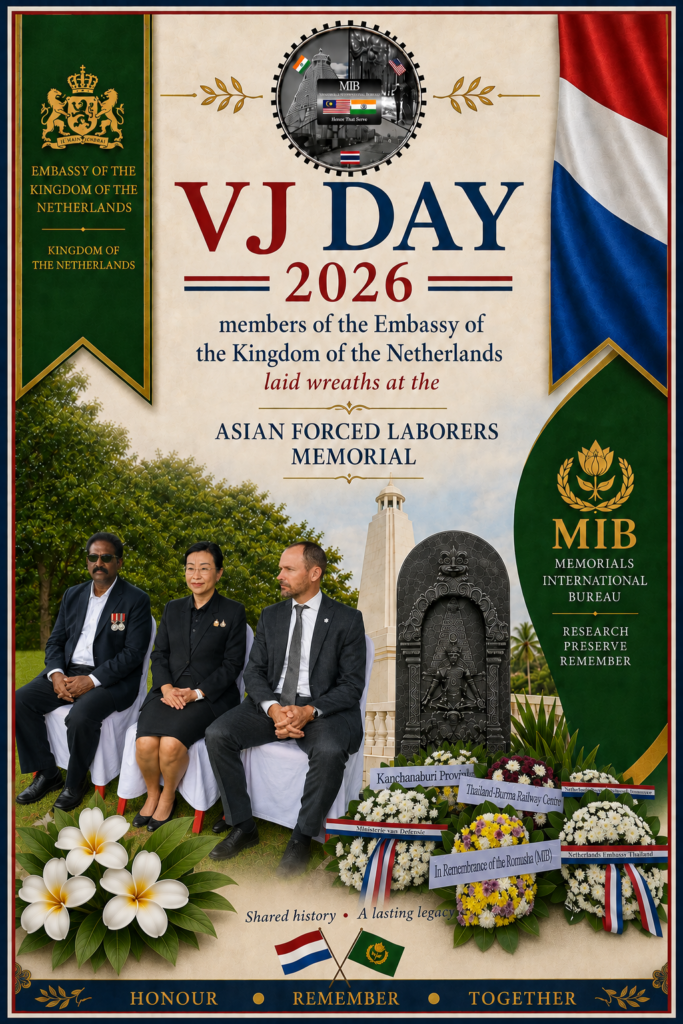
The Dutch Embassy’s connection with the memorial can be traced to Mr. Christiaan Bergwerff, who was present at the inaugural dedication of the Nadukal at Chedi Niranam on 1 May 2024. His attendance at that ceremony provided an early connection between the Netherlands Embassy and the newly established memorial to the Asian Forced Laborers.
The significance of that connection became particularly apparent in 2026. The Netherlands Embassy was led at the 15 August commemoration by its Chargé d’Affaires, Joost van Ettro, who had expressed his wish to lay a wreath at the Nadukal monument during the VJ Day commemoration. The Thai–Burma Railway Centre’s Manager, Terry Manttan, assisted in facilitating a link between the Embassy and MIB.
The principal commemoration began at Kanchanaburi War Cemetery, where van Ettro delivered remarks on behalf of the Netherlands Embassy. He reminded those present that the cemetery contains the graves of thousands of Allied prisoners of war who never returned home, including approximately 2,000 Dutch prisoners. His remarks also deliberately extended remembrance beyond the marked Allied graves to the Asian labourers whose suffering and sacrifice have historically been much less visible. He noted that tens of thousands of Dutch, British, American and Australian prisoners of war and around 300,000 Asian labourers were forced to work on the Burma-Siam Railway under brutal conditions.
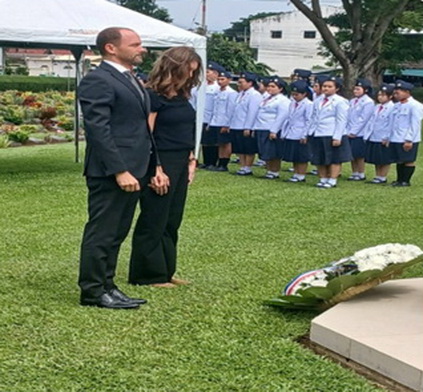
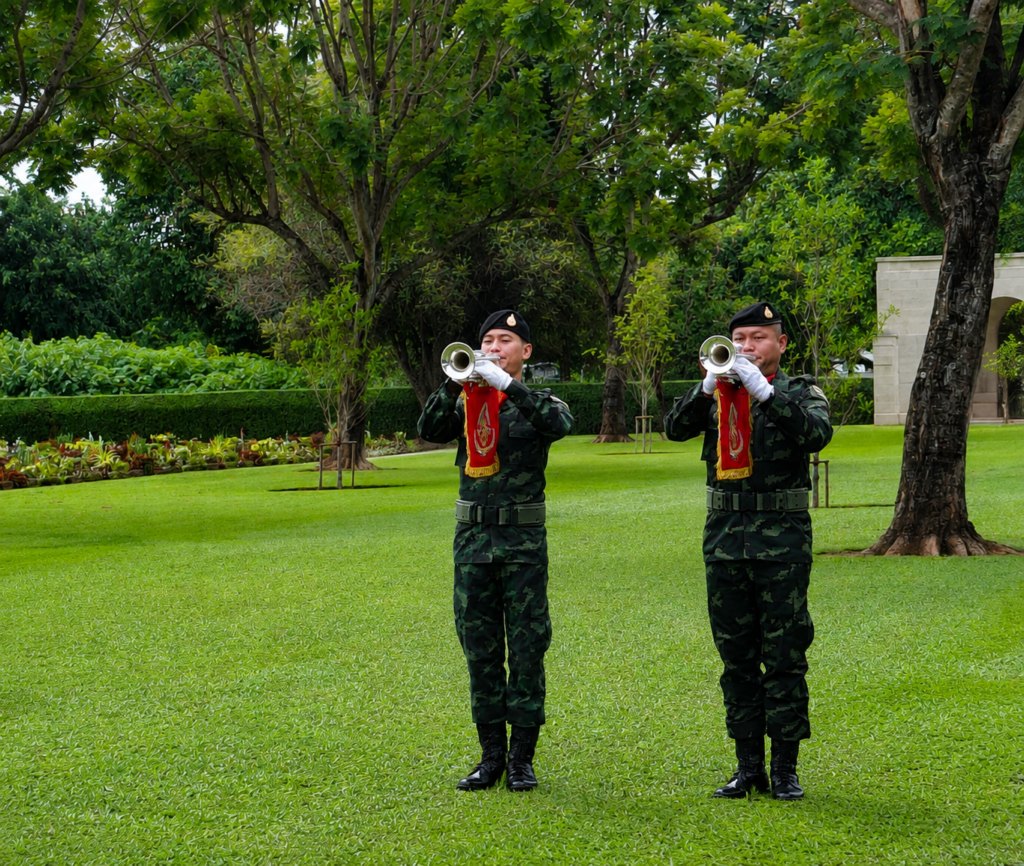
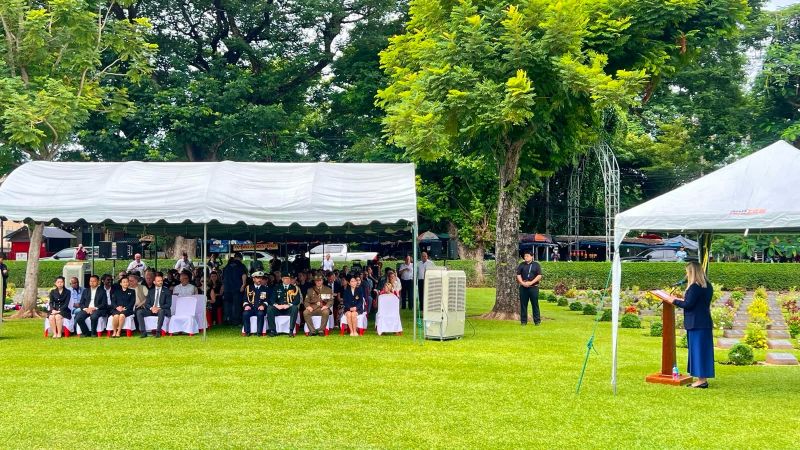
That broader interpretation of remembrance was carried into the second part of the day’s activities at Wat Thaworn Wararam, where the Netherlands Embassy delegation proceeded to the Chedi-Nadukal Pairing and laid a wreath at the Nadukal. The wreath-laying brought the memorial formally into the Embassy’s VJ Day commemoration and represented an important independent acknowledgement of the Chedi-Nadukal Pairing within Kanchanaburi’s broader commemorative landscape.
The development of this memorial is itself an important part of the changing history of remembrance in Kanchanaburi.
Chedi Niranam was constructed in 1957 at Wat Thaworn Wararam, commonly known as Wat Yuan, over a burial place containing more than 10,000 sets of human remains. Its Chinese inscription describes the site as the “Grave of 10,000 Souls.” The number should not be interpreted as an exact census of individuals; rather, it conveys the enormous quantity of remains gathered there. The circumstances of their identities were unknown when the chedi was built.
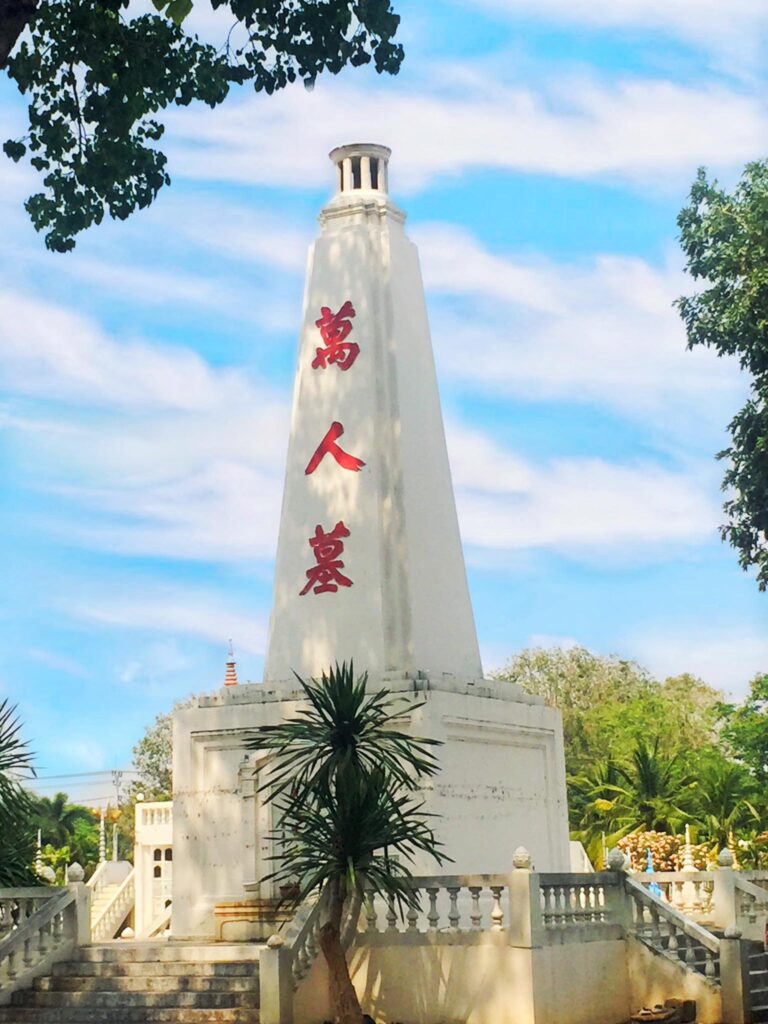
For decades, the people buried beneath the chedi remained anonymous. Modern research has gradually assembled evidence from archaeological discoveries, oral traditions, aerial photography, surviving maps, demographic analysis and the wider history of the Thai–Burma Railway. Taken together, that evidence supports the conclusion that the remains are predominantly those of Asian Forced Laborers, with Malay-Tamils probably representing the largest single community among them. The identification of the population represented by the remains is necessarily reconstructive rather than the result of individual identification.
The distinction between the Allied prisoners and the Asian Forced Laborers is fundamental to understanding why the new memorial matters. Allied deaths were documented through military records, their remains were subsequently recovered, and their graves were placed in identified military cemeteries. The Asian Forced Laborers had no equivalent system of identification. Many died without their names, dates of death or places of death being recorded; some were never properly buried, while others were cremated during wartime disease-control measures. The Chedi-Nadukal Pairing represents an attempt to address that historical imbalance.
The Nadukal was formally placed at Chedi Niranam on 1 May 2024, almost seventy years after the construction of the chedi. A Nadukal, or Hero Stone, is a traditional South Indian-Tamil memorial associated with the remembrance of those who died. It is not a gravestone. Its placement beside Chedi Niranam introduced a specifically Tamil cultural and Hindu dimension to a memorial that had previously been defined principally by anonymity.
The two monuments therefore have different but complementary meanings. Chedi Niranam preserves the remains and acknowledges the uncertainty surrounding the identities of those buried there. The Nadukal provides cultural recognition and context for the principal community now believed to be represented among those remains.
Importantly, the memorial is not exclusively Tamil. The available evidence also points to Javanese, Chinese, Vietnamese, Burmese and other Asian communities among the enormous forced-labor population associated with the railway. The Nadukal gives particular recognition to the Malay-Tamil community without excluding the wider population of Asian Forced Laborers.
This is what made the Netherlands Embassy’s 2026 participation particularly meaningful.
The Netherlands has a deeply established relationship with the history of the Thai–Burma Railway. Thousands of Dutch prisoners of war died during the railway experience, and their graves are preserved at Kanchanaburi War Cemetery. Yet the Embassy’s participation at the Chedi-Nadukal Pairing demonstrated that Dutch remembrance is not confined to the Dutch and other Allied prisoners. It can also embrace the Asian civilians who endured the same wartime construction system.
That position was reflected in van Ettro’s VJ Day remarks. He emphasized that each person who died was more than a statistic: each had a family, a home, a life interrupted by war and a story that should not be lost. He also emphasized the responsibility of present generations to preserve those stories as living memory disappears.
The participation of local students reinforced that message. Students from Srinagarindra the Princess Mother School took part in the commemoration by reading poems, providing a visible connection between the history of the railway and the generation that will inherit its memory.
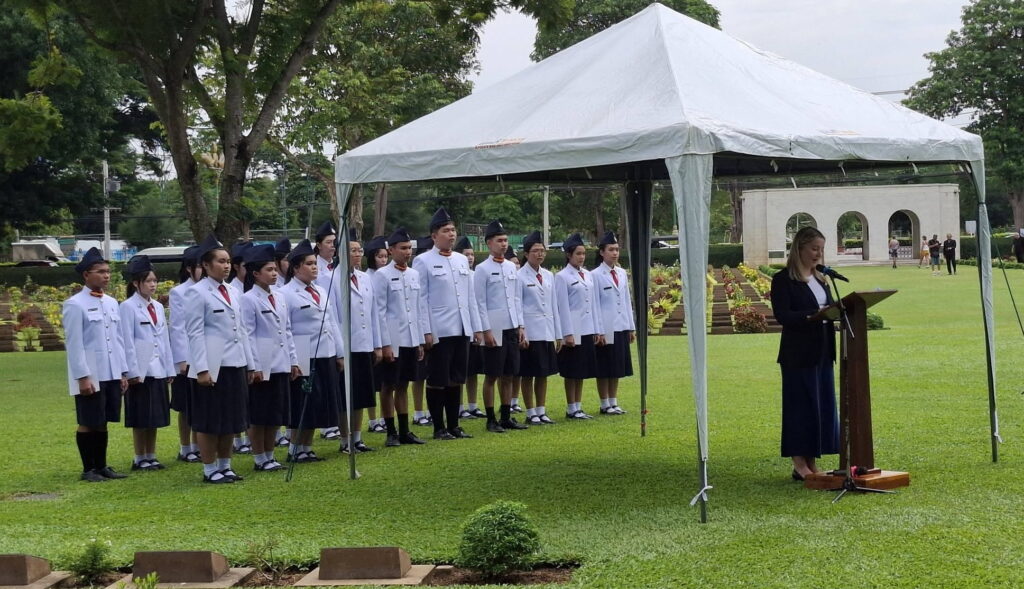
The significance of the Netherlands Embassy’s wreath-laying was also recognized by Malaysians and Indians in Bangkok (MIB), the organization responsible for developing and installing the Nadukal. In correspondence following the 15 August ceremony, MIB acknowledged the Embassy’s participation at both Don Rak and the Chedi-Nadukal Pairing and described such involvement as demonstrating the continuing commitment to preserving and commemorating the history of those who suffered and died during construction of the railway.
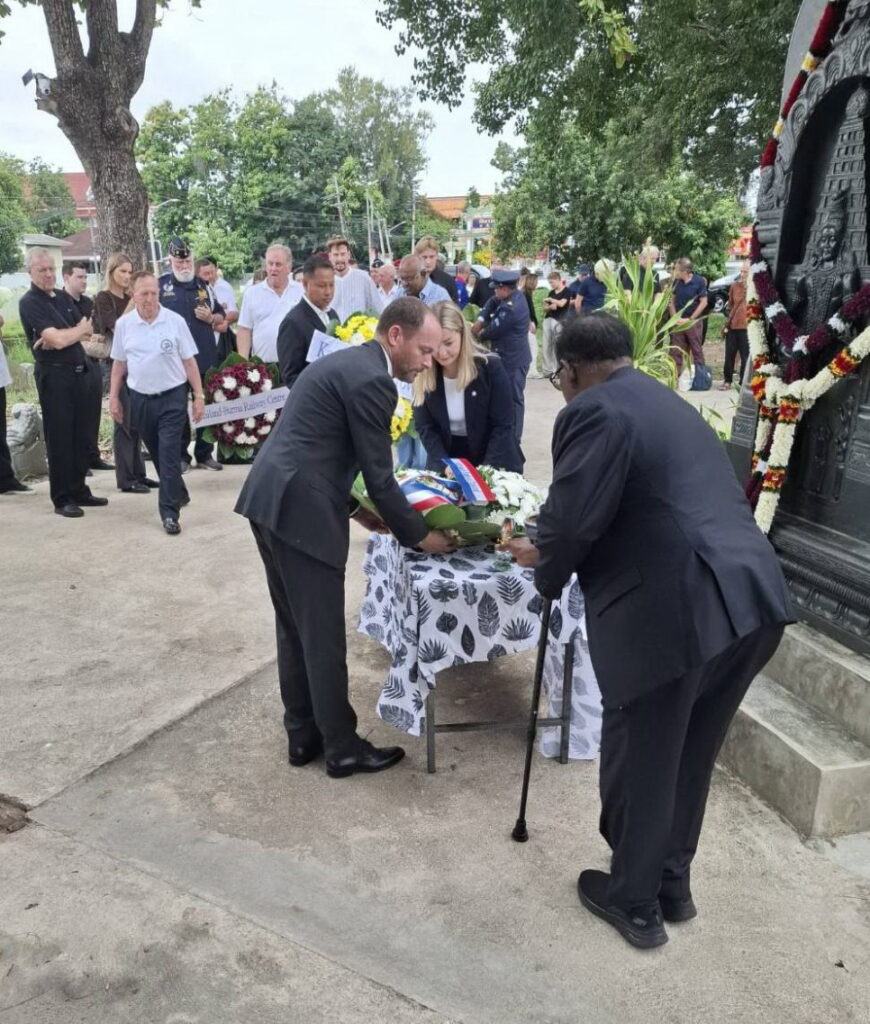
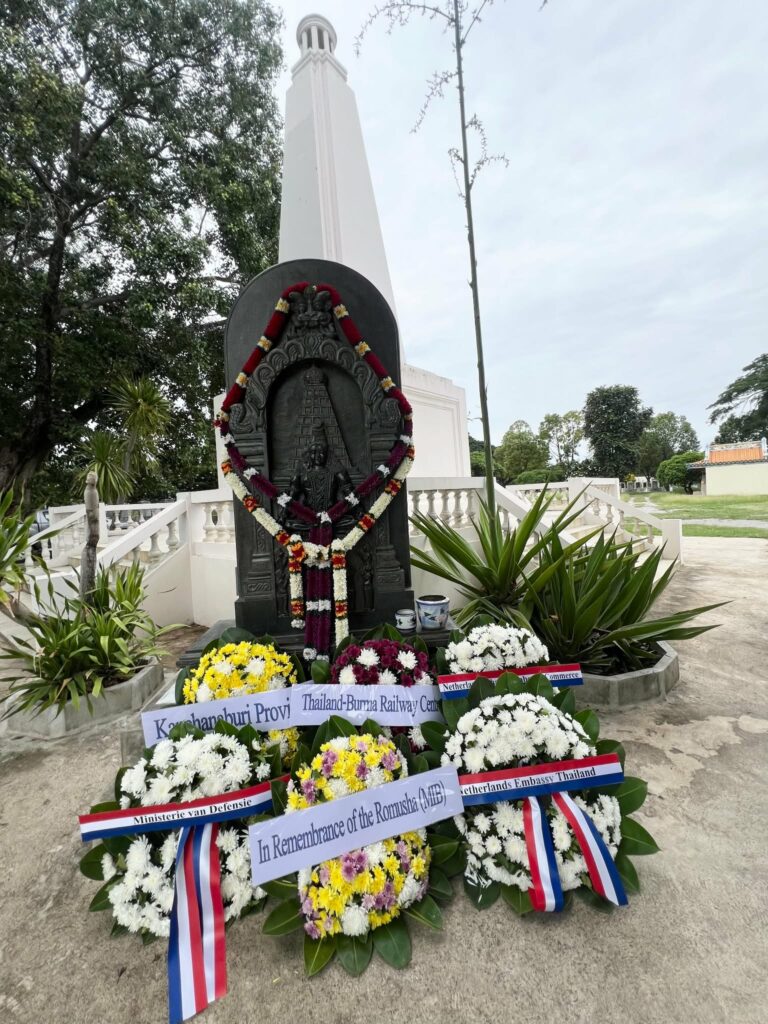
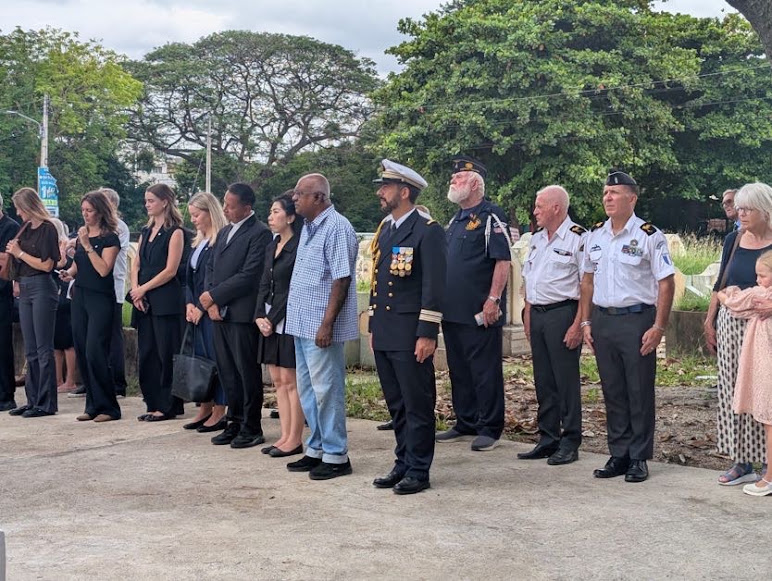
Terry Manttan, Manager of the Thai–Burma Railway Centre, provided an additional perspective on how the inclusion came about. According to Manttan, the Netherlands Embassy asked the Centre to help include the Chedi-Nadukal Pairing as an extension of its established Don Rak and Chungkai commemoration. Manttan subsequently facilitated the connection between the Embassy and MIB and helped organize the wreaths. He expressed the hope that the inclusion would continue in future commemorations.
This development illustrates the changing commemorative landscape of Kanchanaburi. For many decades, the dominant international memorial landscape consisted of the Allied war cemeteries, where individual names and graves preserved the identities of those who died. Chedi Niranam represented something fundamentally different: thousands of people whose identities had been lost. The Nadukal did not erase that anonymity. Instead, it placed beside the anonymous grave a memorial that provides cultural recognition to a major community believed to be represented among those remains.
The Netherlands Embassy’s participation in 2026 therefore connects two forms of remembrance. The Dutch prisoners have their identified graves at Kanchanaburi War Cemetery. The Asian Forced Laborers have the Chedi-Nadukal Pairing at Wat Thaworn Wararam.
Neither memorial diminishes the other. Rather, together they contribute to a more complete understanding of the human cost of the Thai–Burma Railway. The Chedi remembers the anonymous dead. The Nadukal provides cultural recognition to communities represented among them. The Netherlands Embassy’s participation acknowledges that their remembrance belongs within the international history of the Thai–Burma Railway.
On VJ Day 2026, the Dutch connection with the Chedi-Nadukal Pairing moved from an early personal presence at its inauguration to formal participation by the Netherlands Embassy in the annual commemoration. It was a small ceremony in physical terms, but an important step in making the history of the Asian Forced Laborers part of the broader commemorative story of Kanchanaburi.