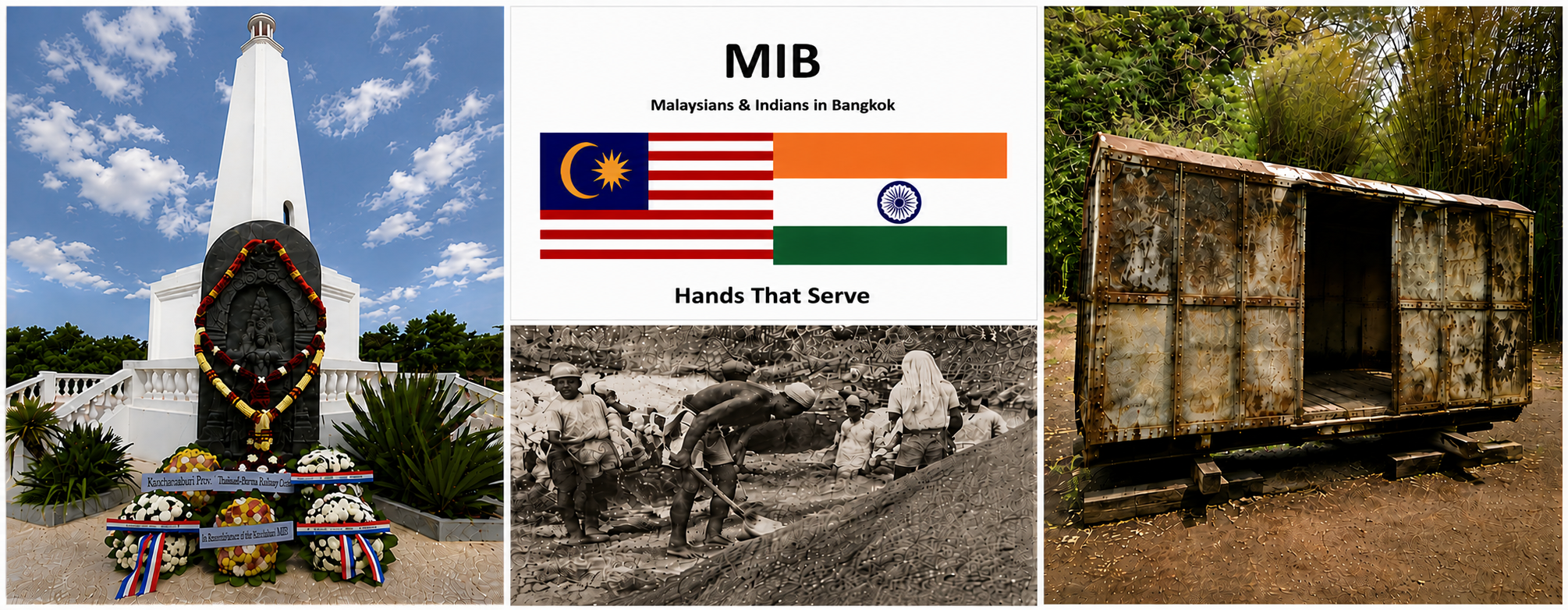
Following the ceremony at Wat Tai to commit the cremains to the river, the MIB group escorted the specially prepared box of remains[1] to Wat ThaWorn Wararam. There the MIB group met with the abbot Pra Samananam Teerajaan and the head of the temple’s committee of elders. Also in attendance were three guests who were involved in the handover of the bones on 18 JAN who came to support the MIB effort: Professor Forn Prempan, Acharn Proprute Maliphol and Khun Thansawath Saranyathadawong.
The MIB presented its plan to build a small crypt near Chedi Niraman in which to re-inter those remains. The abbot countered with the suggestion that those remains should be added to the Chedi[2] itself. The committee head agreed. Next the abbot suggested that the prime opportunity to do this was during the planned 2 APR 2025 annual QingMing[3] ceremony. The MIB group was honored to receive such an offer and readily agreed to be full participants on that day. The abbot further agreed to accept the boxed remains under his auspices and store them until the ceremony.
The discussion shifted to how to best tell the story of the temple’s involvement in burying the remains in the 1950s and then the addition of these cremains to join their comrades. Prof. Forn agreed to write such a history[4] and the MIB agreed to constructing a sign board to display it. Again a counter-proposal was made by the committee head that the story be inscribed in granite and placed on the rear wall[5] of the Chedi. Having been apprised of the website that the MIB has developed to tell the story of the Asian Forced Laborers and their interment in Chedi Niraman, they also agreed to allow the MIB to place a QR code on the chedi that would send visitors to that website to allow them to access the larger story[6].
The meeting closed with MIB Chairman Dr. Silva Kumar requesting the temple’s approval to hold an annual ceremony o/a 1 MAY to commemorate the dedication of the Nadukal. This would be the time that Malaysians and Indians would gather to honor the deceased workers buried at the cemetery. The abbot and committee members were extended an invitation to attend and even participate to any extent they so desired.
[1] The remains therein were the skulls and the two complete skeletons from the museum display case. All of the other cremains were committed to the river.
[2] There is a portal on the rear of the structure that would allow such access.
[3] Despite not knowing precisely who is buried in that obelisk, the temple has held an annual ceremony during the time of the Chinese traditional QingMing season. https://en.wikipedia.org/wiki/Qingming_Festival
[4] Two panels are planned.; one in English and the other in Thai.
[5] This would place it behind and just to the left of the Nadukal.
[6] This would include an explanation of the significance of the Nadukal to this story as well as a history of the Tamil workers’ involvement. https://www.afl-mib.org/
2 APRIL 2025 UPDATE:
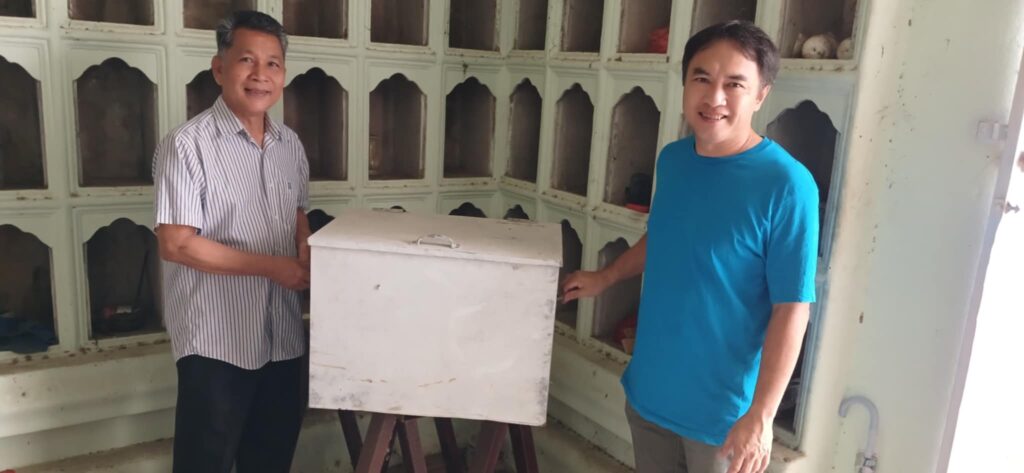
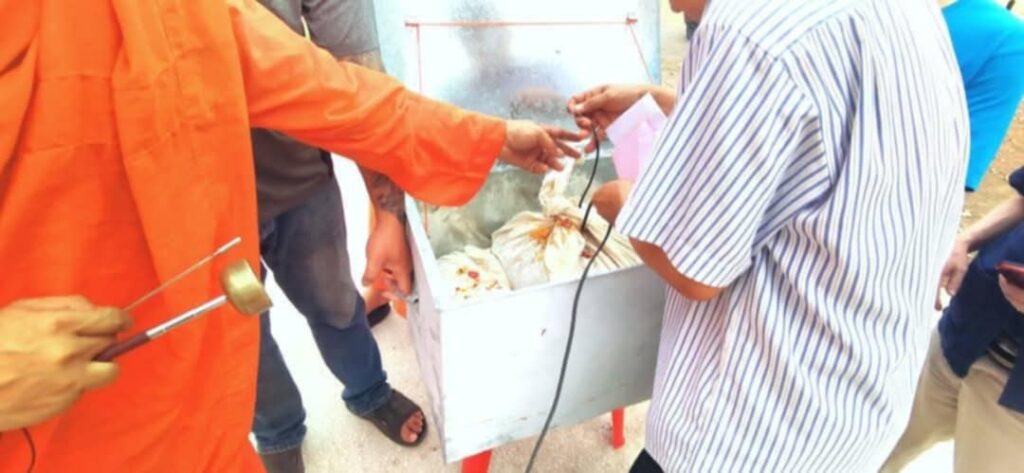
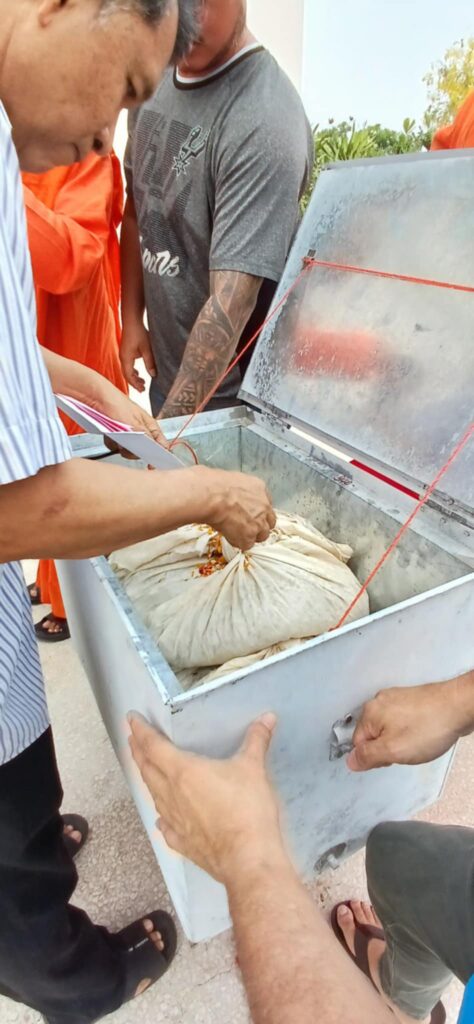
Early on 2 APR 2025, Dr. JJ KARWACKI representing the MIB met with Acharns Lek and Phon and Khun Gay at Wat Yuan. The container of cremains was moved from the storage room to the obelisk. There we were joined by Phra Gla. After we provided him with the background story of the Tamil involvement with the romusha and the link to the JEATH museum, he led two other monks in a blessing prayer.
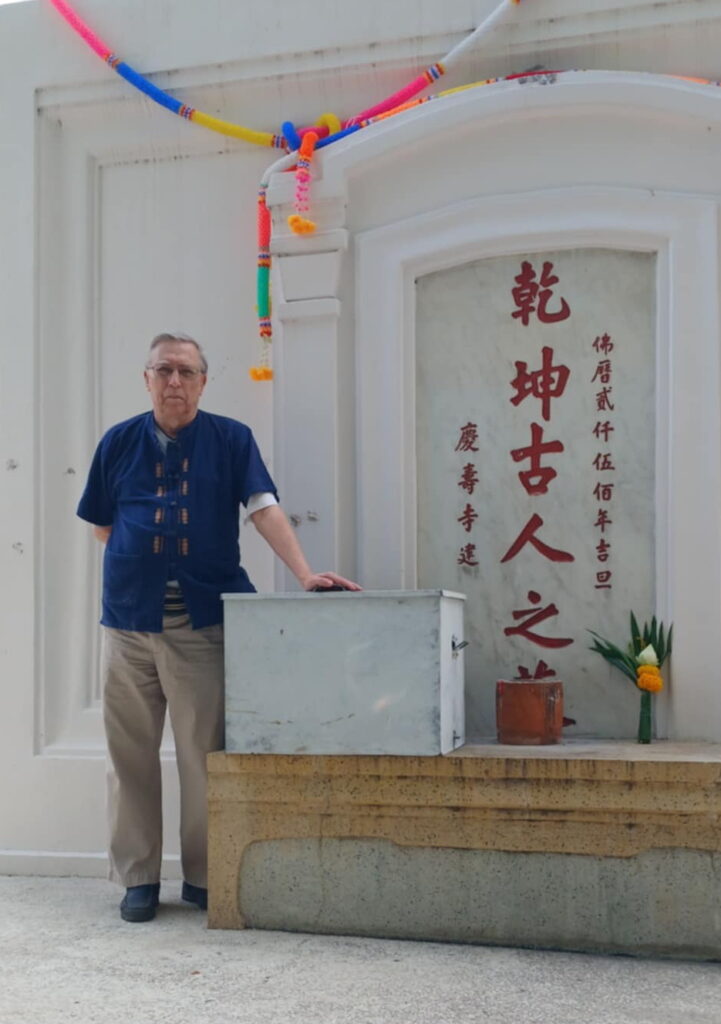
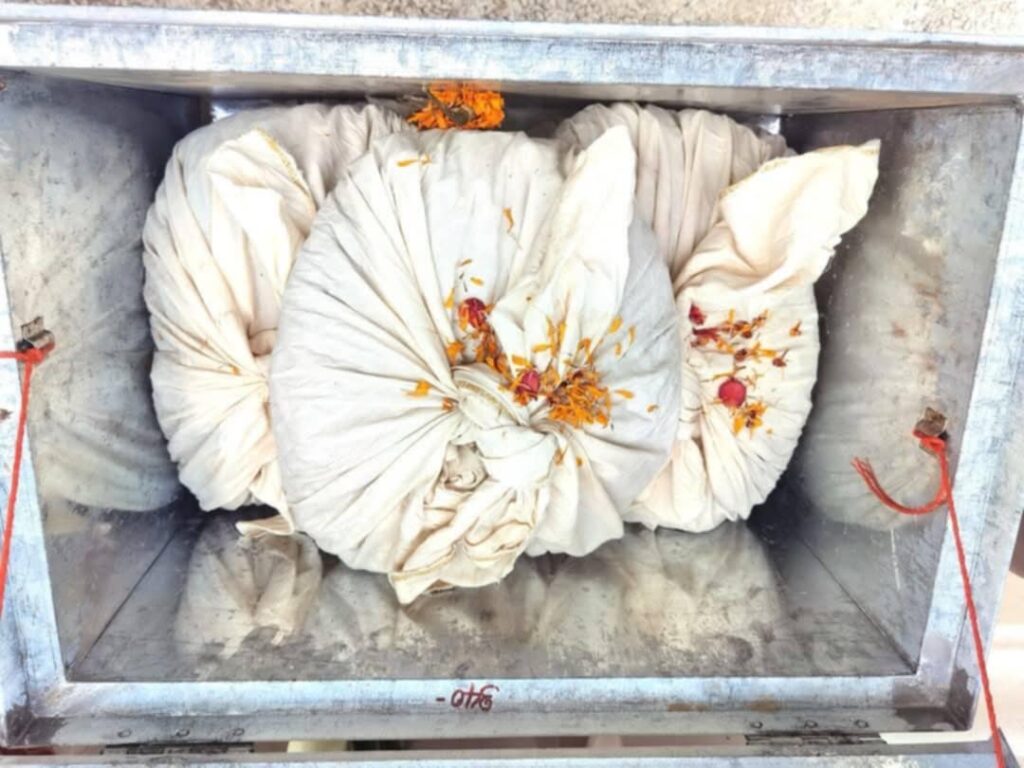
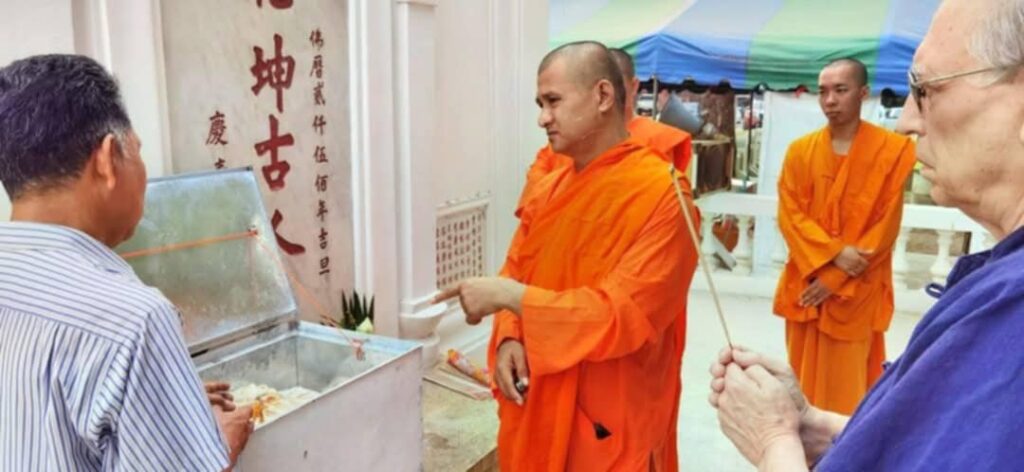
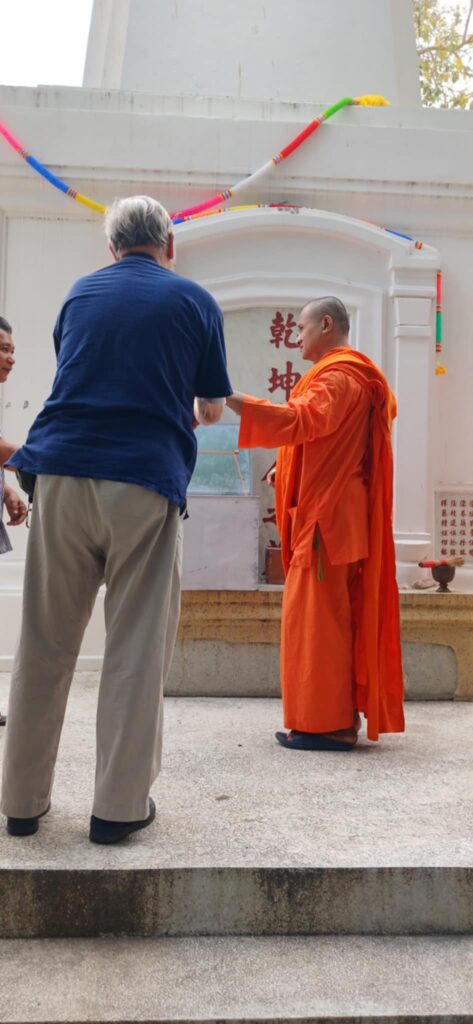
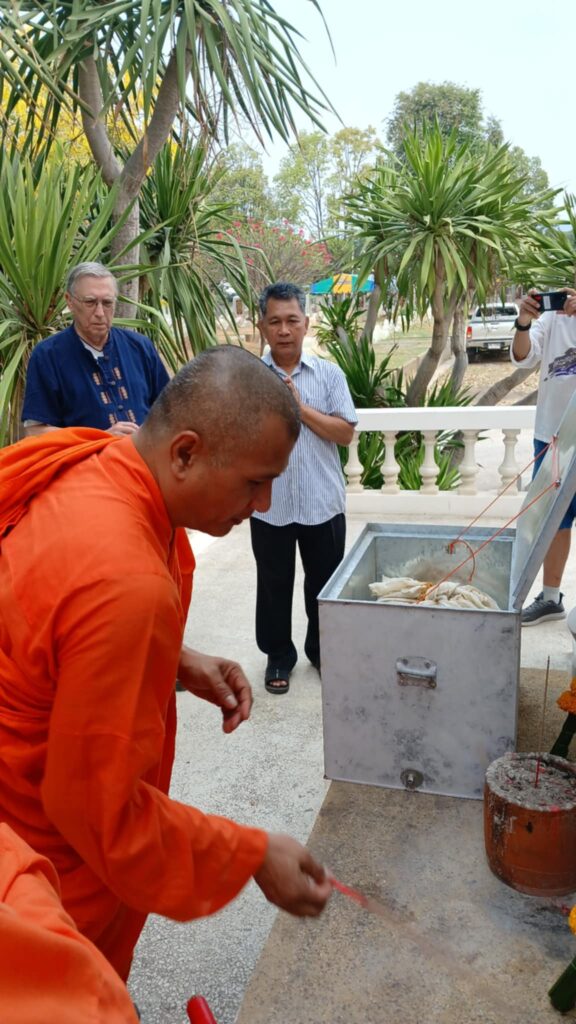
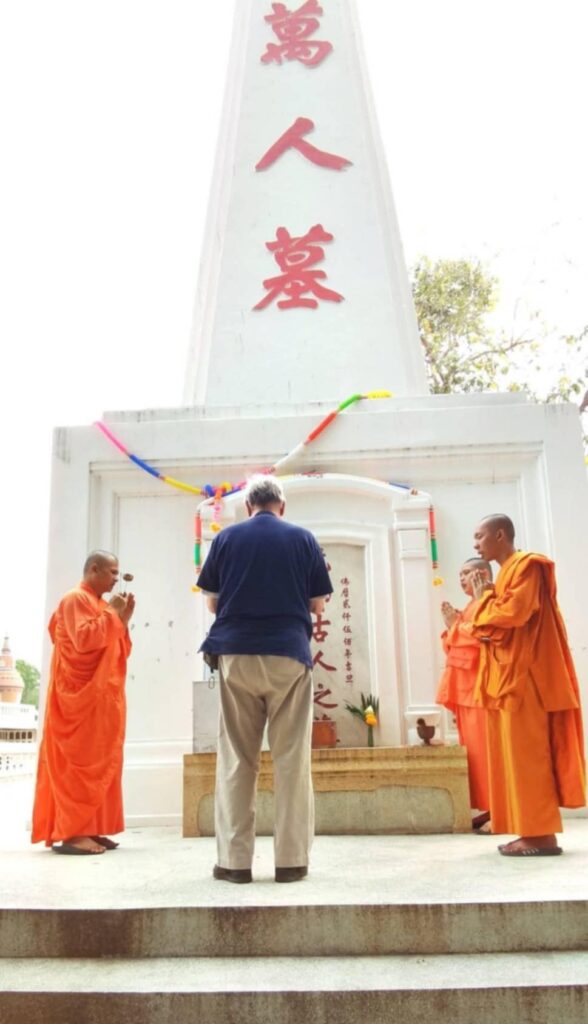
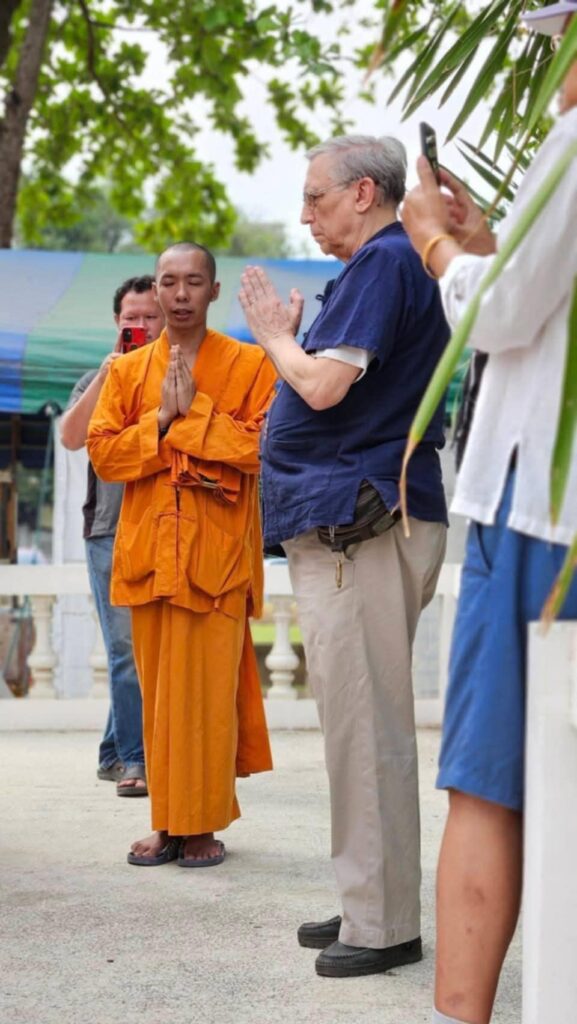
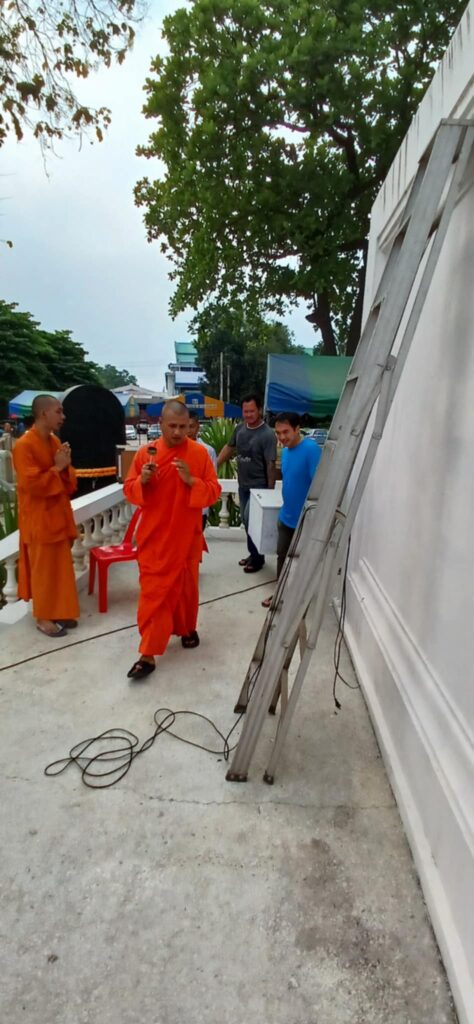
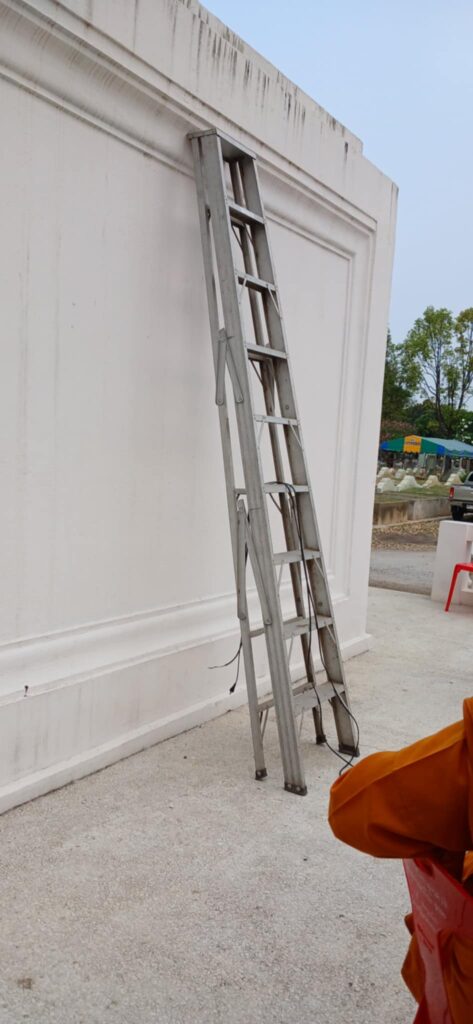
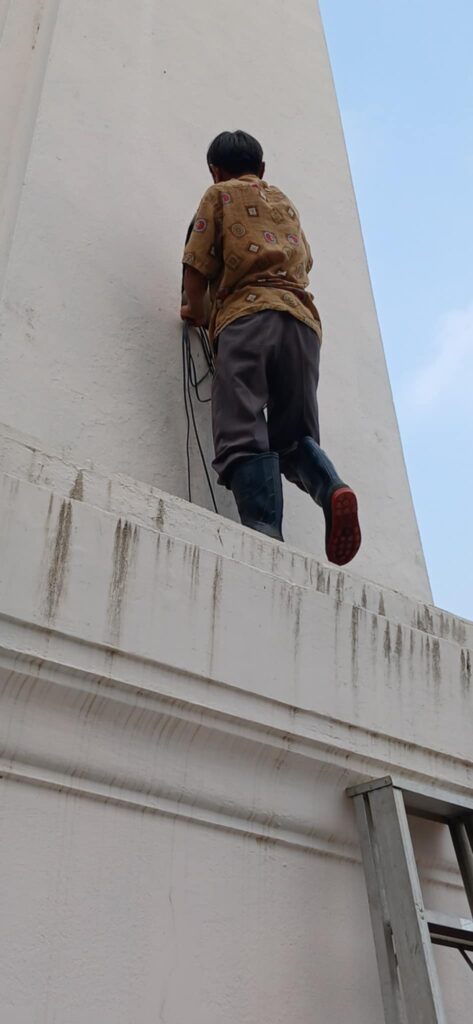
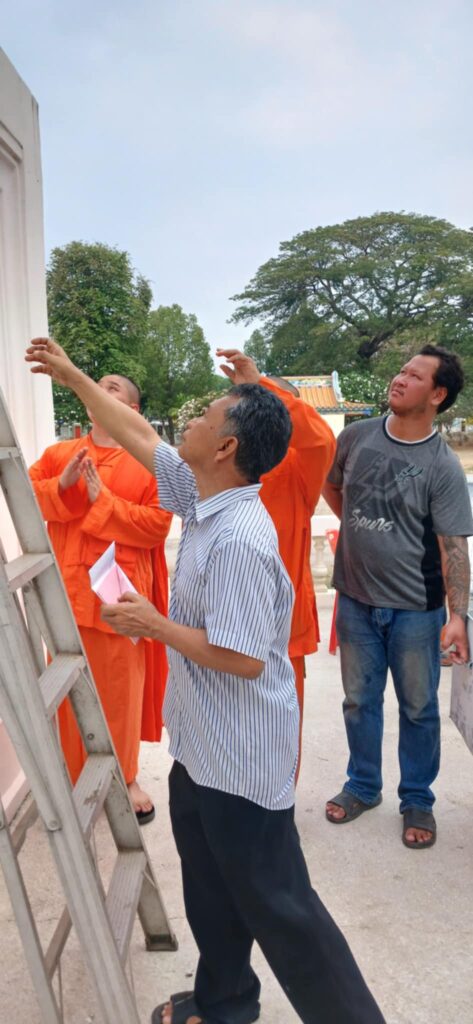
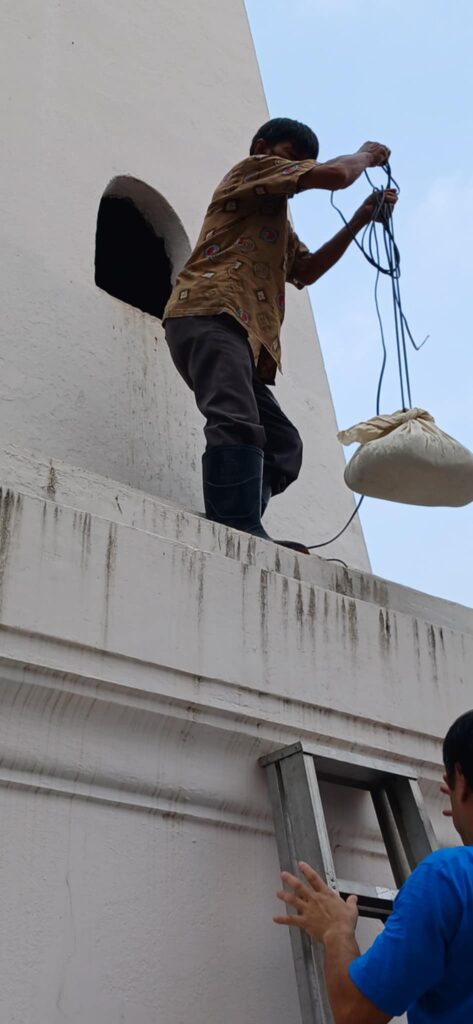
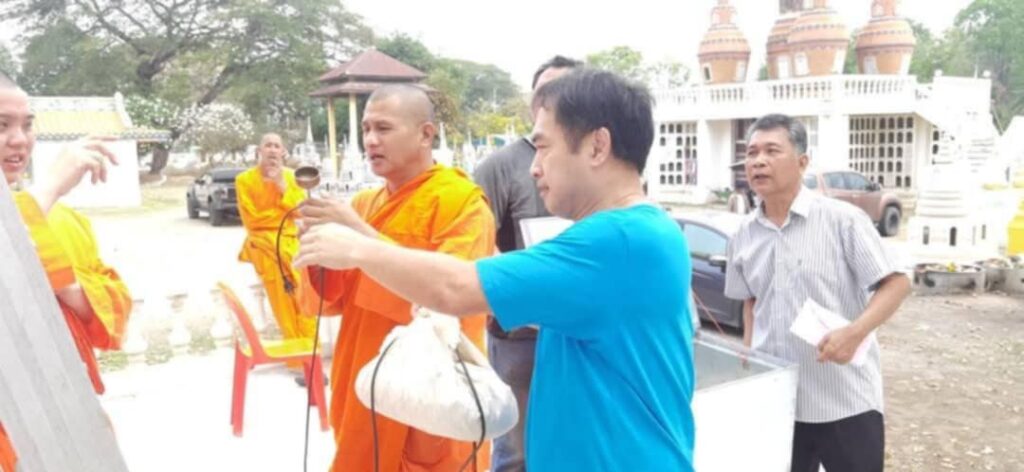
Then there was a brief procession to the rear of the obelisk where a simple ladder had been placed. The caretaker climbed to the access portal of the obelisk. As the monks chanted another prayer, the five bags of cremains were hoisted up and placed inside the obelisk thus re-uniting these romusha with their brothers and sisters.
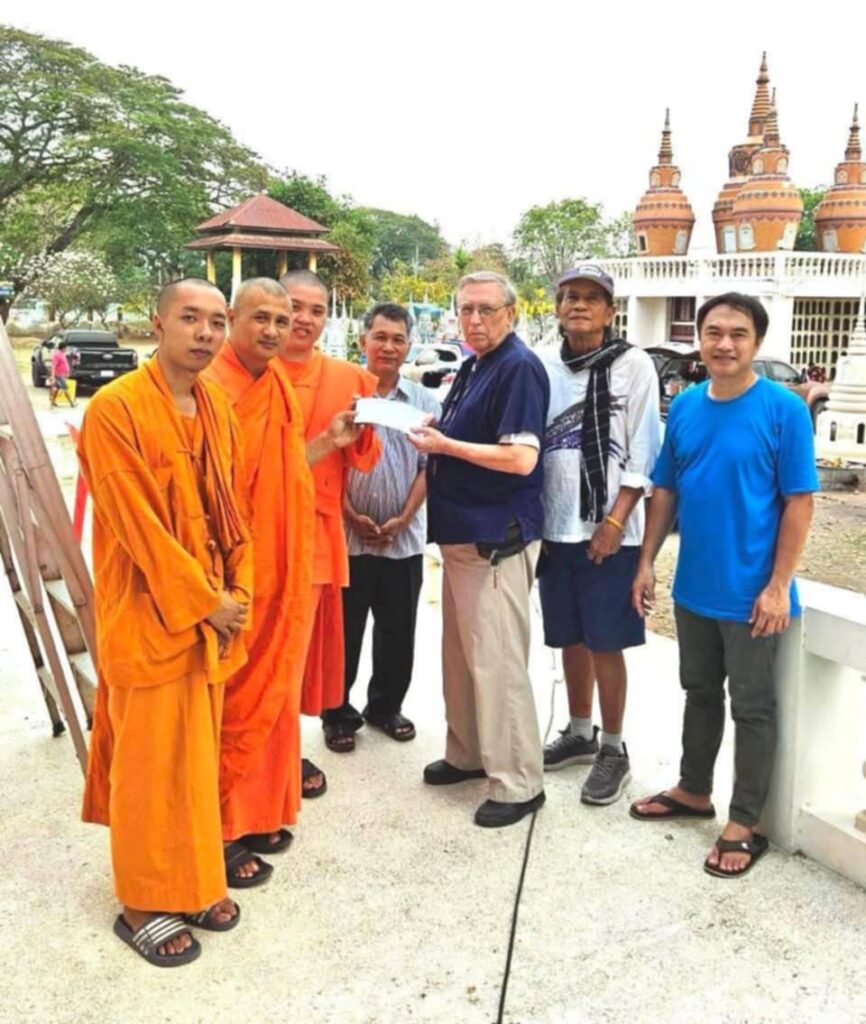
Finally, a donation was provided to the temple on behalf of the MIB.
The MIB wishes to thank all of those who played a part in this momentous event to reunite these members of the Malay-Tamil romusha community with their brethren after years of public display.