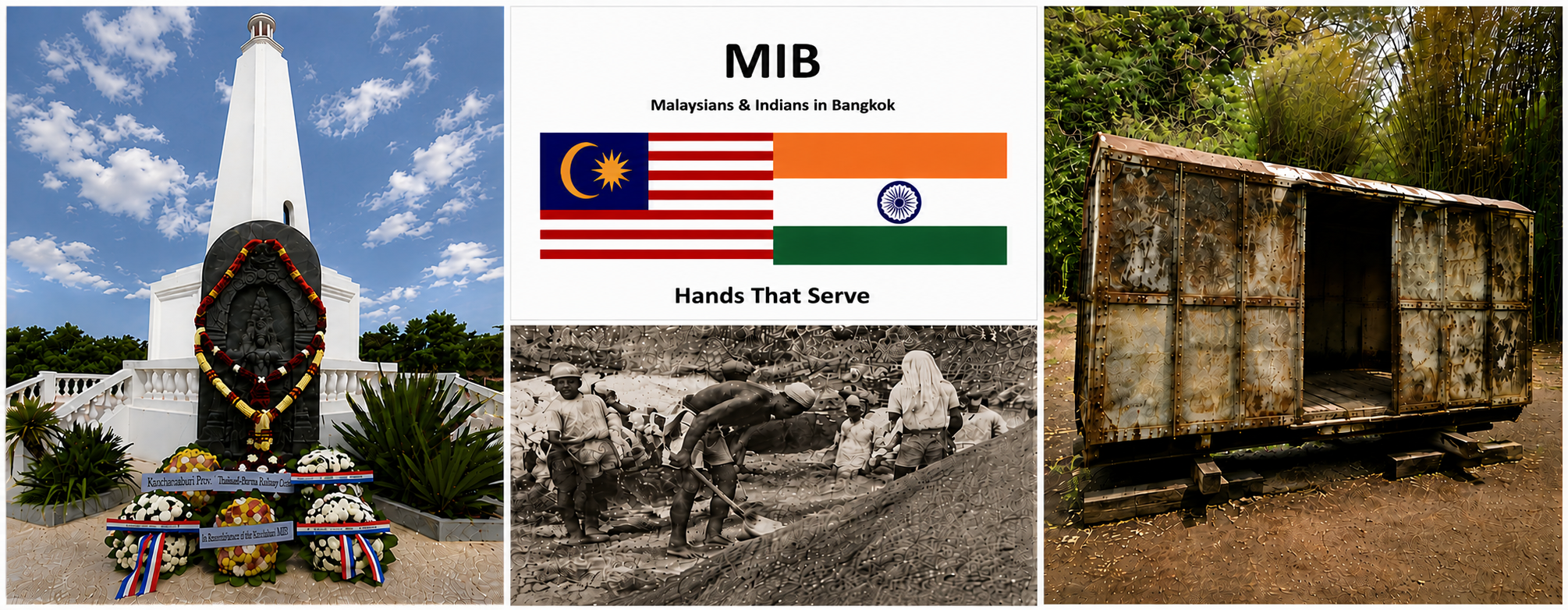
We will never know their names.
We will never know how many nor exactly where they came from.
We can, however, try to tell their story so that they will never be forgotten.
Why is it that we know so little about the AFL workers? The answer is quite simple: all the records were destroyed. In IJA documents discovered in archives after the war, the motives were revealed. The Japanese were fanatic record keepers, but in the weeks immediately following their surrender in August 1945, the IJA was ordered to destroy any and all documents pertaining to the romusha. It seems that although they acknowledged some duty to turn over their records of the Allied POWs and even the Allied civilians, they saw the employment of the romusha as an internal matter not governed by any international agreements like the Geneva Conventions. The IJA staff in Kanchanaburi were particularly efficient at that task.
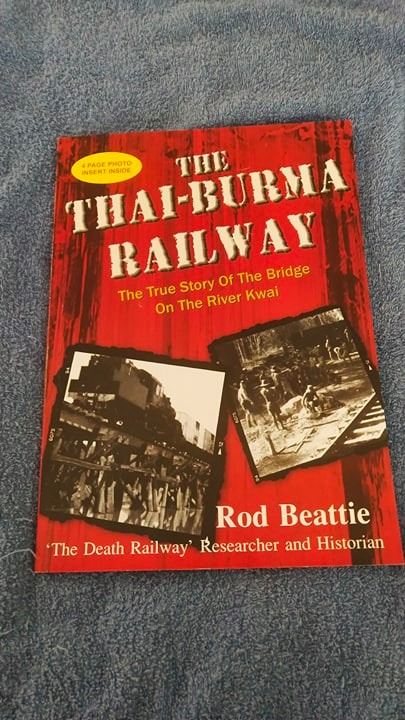
Those same archives revealed the movements of the Allied POWs in exquisite detail. Yet, there are no romusha records. The numbers that are most commonly discussed are best guesses from a limited number of sources. One source of such numbers that is often quoted is the Founder of the Thai-Burma Railway Centre, Rod Beattie. He has dedicated much of his life to researching the true saga of the TBR and has published a number of books on the topic.
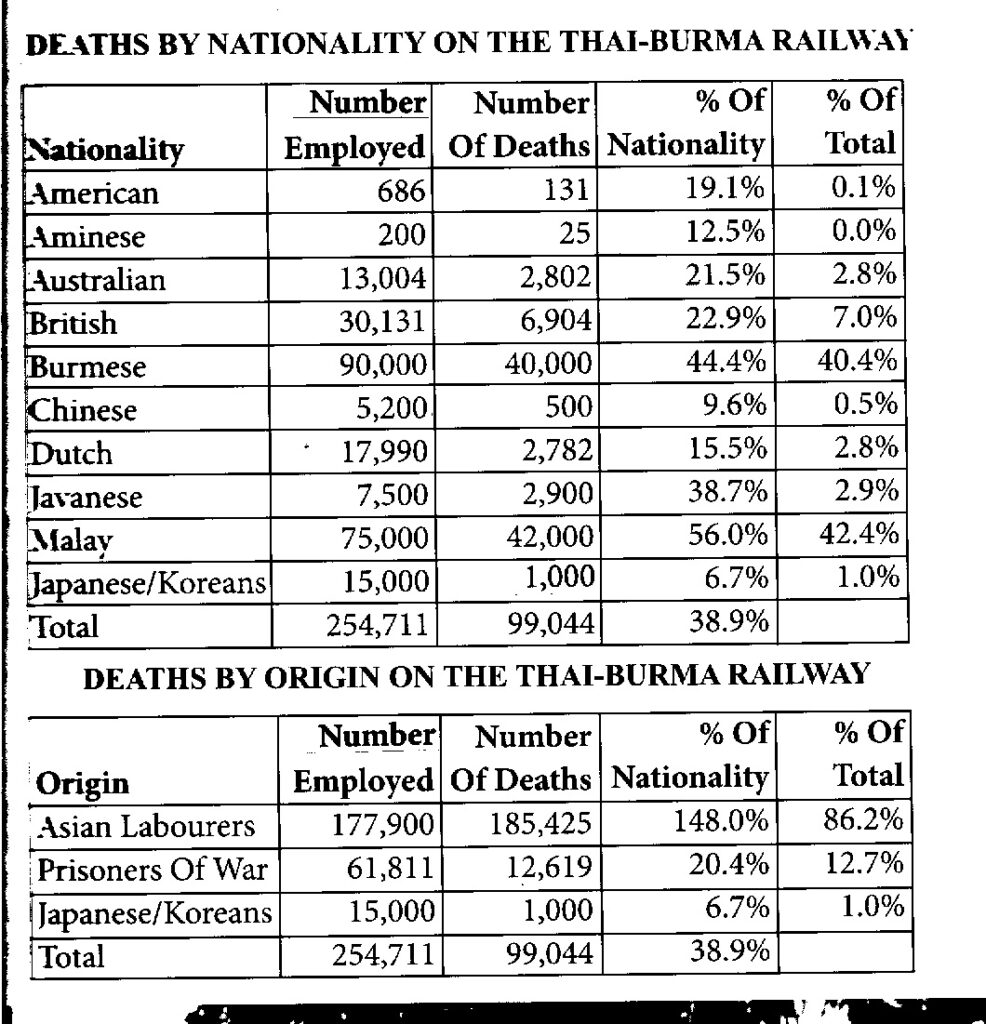
It is never clearly revealed just how he arrived at these numbers. But they are the best that exist and the most oft quoted and for that we give him the benefit of the doubt. It must be pointed out that the number of Burmese cited above is now thought to be less than half of the actual number of individuals employed. Ninety thousand is likely the number who were working at any given time, but there was such a high rate of desertion that closer to 200,000 were impressed into service. Likewise, the numbers of deaths are only estimates with no real documentation.
The closest thing to documentation that there were Javanese on the TBR comes from a casual mention by Australian LtCol. E.E. Dunlop. He had been captured on Java and was later shipped to the Hintok area. He notes in his diary that he encountered a group of Javanese as they made their way into the highlands west of Hintok. He makes no mention of numbers nor does he indicate if they were civilians (AFLs) or native Javanese members of the Dutch Army (KNIL). Seemingly they were the former. Like the Vietnamese (labelled Animese above), their presence is noted at the Thai-Anusorn memorial. [see Section 10.1]
In addition to those who worked the TBR, it is estimated that an additional 100,000 – almost entirely Tamils – were imported in 1945 to work on the Mergui Road.
5a Maj Campbell’s Report
British Major R. Campbell was one of the senior medical officers who were sent to Thailand in late 1943 as part of K Force. That and L Force consisted of a few hundred medical personnel who were supposed to provide medical relief to the severely depleted Asian Laborers. Immediately post-war, he wrote a report on the medical conditions and statistics of that unfortunate labor force.
Campbell is credited with an encounter that shed some light on the numbers of romusha but at the same time complicated that discussion. He received information from an IJA clerk reporting that “250,000 Malayan and 100,000 Javanese labourers were brought to work on the line”. This estimate of 100K Javanese is far higher than any other statements that are usually closer to 10K. [see the table above] The fact that this Japanese corporal was said to have been assigned in Burma complicates the question as to where these 350K worked. He specifically notes the presence of 500 Javanese at the Lonsi camp at KM68 in Burma.
He also reports that 50K of the 60K Allied POWs worked in the Thai Sector. This is also a somewhat higher estimate.
As to post-construction efforts, Campbell says there was a “scheme to repatriate 20,000 Malayan labourers and to recruit 25,000 more” in MAR 44. No one else makes such a report.
He makes note that a lucky few Malayan labourers were assigned to maintenance duties along the 50K section between BanPong and Kanchanaburi. Most of the AFL had to endure a weeks-long trek of up to 300 Km to reach their assigned work places near the Burmese border. Campbell estimates that between 1/8th and 1/5th of them never completed that trek. The lucky ones found a bed in a hospital; most did not.
He spends the majority of the 20-page type-written report detailing the appalling conditions the AFL endured. He recounts 5000+4000+2000 AFL deaths in but three highlands camps. This is nearly equal to 12,000 known Allied POWs deaths for the entire POW workforce.
He provides an overall estimate of AFL deaths at 50% of that force, but without placing a denominator on that figure. All things considered, Campbell’s estimates of numbers are fragmentary and unconfirmed and therefore contribute little to determining the actual numbers of AFLs or where there were assigned.
5b Allied survivor accounts
There are dozens if not hundreds of survivor accounts written by the Allied POWs. Those that even mention encounters with any romusha provide us with little or no real information except perhaps some anecdotes about the differences in the conditions and treatment of the AFL versus the POWs.
The ALLIED POWs who worked in Thailand and would have encountered AFL came from Singapore or Java. For the most part they had been in those places only a matter of weeks. We’ll give them the benefit of the doubt that they would have been able to distinguish Thais, Chinese and Javanese by the languages they spoke rather than by their physical appearance. But few, if any, would have had prior contact with the Tamils from Malaya. For lack of any other data, the term “dark skinned men” is usually how a POW would identify any of these that he might have encountered.
In short, nothing in the English survivor literature provides us with any truly useful information about the AFL. The most oft described events are when POWs were sent into the decimated camps to cremate those who had died of cholera.
The only positive identification comes from the diary of Australian LtCol E.E. Dunlop. He had been captured on Java and notes that a group of Javanese passed through his Hintok area camp enroute westward. The Javanese who worked the TBR are thought to have been civilians as opposed to local conscripts of the Dutch Colonial Army (KNIL). But Dunlop makes no mention of numbers nor status. Their most oft quoted number is 7500, but no documented source for that figure seems to exist. Campbell’s report includes a statement that there may have been as many as 100,000 Javanese on the TBR.
======================
5c Romusha estimates per the TBRCtr (Rod Beattie)
CHATGPT query:
These are the generally accepted figures for AFL/Romusha workers as promulgated by the TBRCtr (Rod Beattie). What evidence is provided for them? Has Beattie ever offered a defense of them?
| TBRCtr | estimates | of AFL | workers | |
| nationality | AFL | deaths | % dcd | more likely |
| Burmese | 90,000 | 40,000 | 44% | 180,000 |
| Malay-Tamil | 75,000 | 42,000 | 56% | 250,000 |
| Javanese | 7,500 | 2,900 | 39% | >15,000 |
| Chinese | 5,200 | 500 | 10% | >5,200 |
| Vietnamese | 200 | 25 | 13% | 200 |
| Thai | <15000 | 0 | <15,000 | |
| other M-T | 150,000 | 50,000 | 33% |
CHAT reply:
I cannot locate evidence that Rod Beattie has published a systematic methodological defense of these specific AFL/romusha figures in the way a historian normally would—namely: sources, assumptions, error ranges, and derivation steps. I can locate repeated use of the figures and occasional explanatory remarks, but not a formal defense.
Your image reproduces the commonly circulated TBRC-style table very closely:- Burmese: 90,000 / 40,000 deaths Malay-Tamil: 75,000 / 42,000 deaths Javanese: 7,500 / 2,900 deaths Chinese: 5,200 / 500 deaths Vietnamese: 200 / 25 deaths Other Malay-Tamils: 150,000 / 50,000 deaths
The problem is not that the numbers exist; the problem is the evidentiary chain behind them.
Three observations stand out:1. The figures are usually presented as finished numbers rather than reconstructed estimates
The numbers often appear in tables without attached explanation such as:- which Japanese records were used which postwar files were used how overlap was removed how missing populations were handled uncertainty ranges
“Malay-Tamil workers: estimated 75,000–120,000”
rather than: “75,000”Yet TBRC tables frequently present rounded but precise-looking totals.
That creates an appearance of certainty greater than the surviving evidence likely supports.In an interview he noted that Asian laborers:
“left no written testimonies” and “almost no documentation exists.”
That is an important admission.If documentation is sparse, then highly specific subgroup totals become difficult to justify.
There is a tension:- sparse records but specific numerical allocations
The missing step is the published explanation of that reconstruction.
3. The ethnic distributions themselves raise questions
Your highlighted concern about Malay-Tamils is important.The TBRC distribution implies:
| Group | TBRC workers |
| Burmese | 90,000 |
| Malay-Tamil | 75,000 |
| Javanese | 7,500 |
Why?
Because:
Java supplied extremely large labor pools under Japanese control. Some broader literature estimates hundreds of thousands of Javanese laborers moved around Southeast Asia generally. The railway itself likely drew workers in multiple waves, often with poorly documented transfers.That does not prove TBRC wrong.
It does mean the numbers require methodological explanation.On your specific question: Has Beattie publicly defended them?
I cannot locate a published defense of the form: “The 75,000 Malay-Tamil figure derives from X records plus Y transport manifests adjusted by Z mortality assumptions.”Nor have I found discussion of confidence intervals such as
:±20,000.Instead I find repeated use of the totals and acknowledgement that Asian labor documentation is fragmentary.
My assessment:| Question | Assessment |
| Evidence openly provided for subgroup totals | 3/10 |
| Transparency of methodology | 2–3/10 |
| Plausibility as broad order-of-magnitude estimates | 7/10 |
| Plausibility as precise demographic counts | 4/10 |
| Published defense located | None found |
A distinction matters here:
“rough demographic reconstruction” and “demonstrated count” are not the same thing.The TBRC numbers may be useful as working approximations. The difficulty is that they are often repeated downstream as if they were measured facts.
Your own added column (“more likely”) is essentially asking whether the TBRC numbers should be treated as lower-bound estimates rather than definitive counts. Given the acknowledged scarcity of Asian labor records, that question is reasonable and deserves a documented answer rather than an assumption.