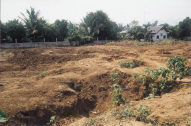
This story begins in 1990. Mr. Sompong was haunted by dreams of shabbily dressed, emaciated people asking him to help them. Using clues seen in those dreams, he located a sugar cane field near what is now the Kanchanaburi Governor’s Office. The field had been recently harvested and he and some friends began to dig. In less than a meter, they uncovered some bones. Eventually the Archeology Dept. of Silapakorn Univ in Nakorn Pathom became involved in an effort to properly document this site. They soon showed that these were bones from World War II! The common household items in these graves all dated from that era.
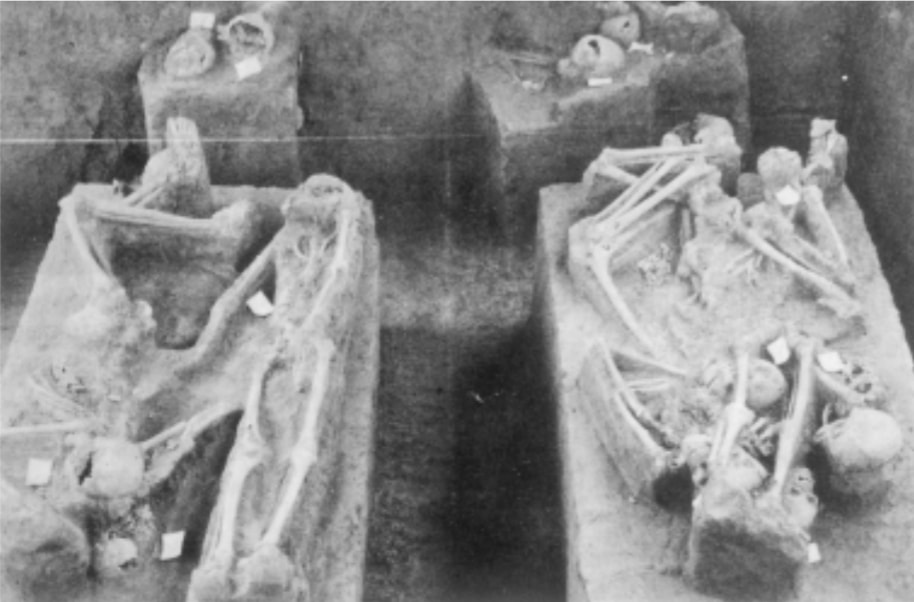
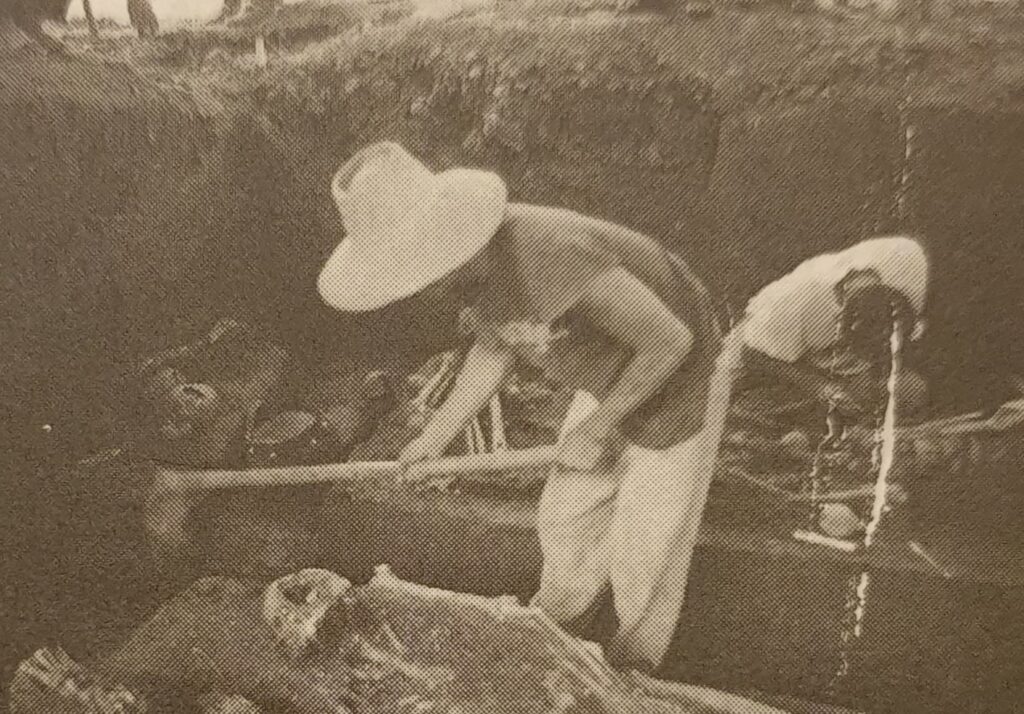
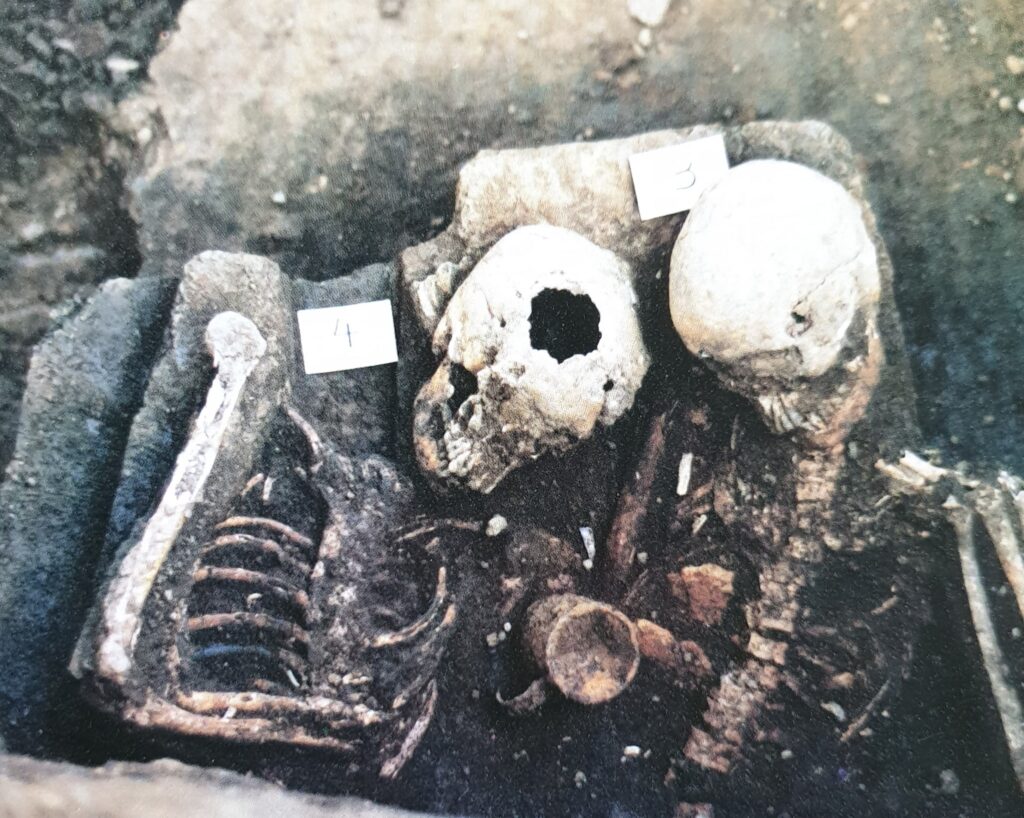
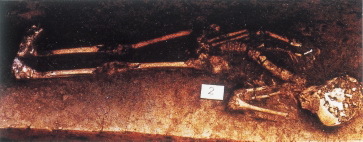
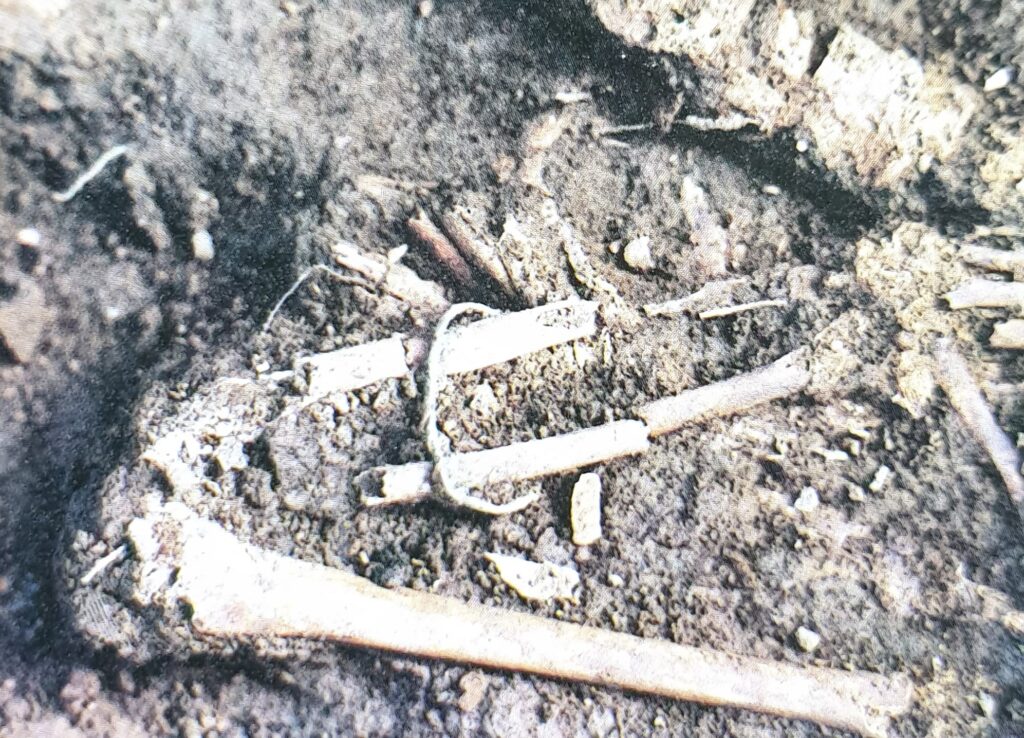
It was known that there was a camp for tens of thousands of Asian Forced Laborers (aka romusha) in the Kanchanaburi area, These graves were in an area next to a hospital[1] that the Japanese established to treat some of the 60,000 Allied POWs who worked on the Thai-Burma Railway. The single best piece of physical evidence as to the origin of these remains was a bracelet found on the wrist of one of the skeletons[2] that the investigators determined to be of Tamil style. One version of this story states that 9 such items were found but this is not well documented.
Over the course of a few weeks, about 500 sets of remains were uncovered in this rather small field. For various reasons, excavations were not carried out in any adjacent area. There is documentation that the Allied POWs who died at that hospital were buried just to the north of this location. Immediately after the war, the remains of those soldiers were re-located to the Don Rak CWGC cemetery.
When the archeologists had completed their work most of the bones were turned over to the Bodhibhava Foundation for making merit and brought to a cemetery in Saraburi[3].
Two other sets of these remains were separated out. Thirty-three skeletons were claimed by Professor Worawut Suwanrit of the Muang Singh Historical Park[4] for further study. This Park is the location of one of the prehistoric finds. Those remains have since been lost.
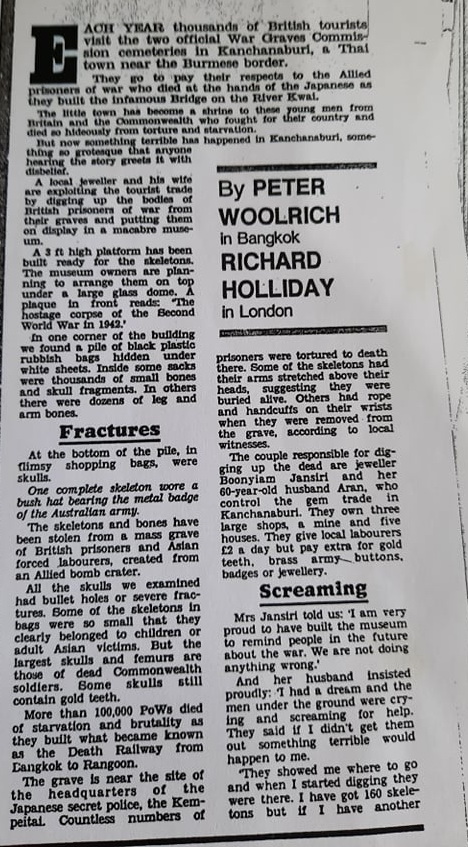
But most vital to this essay are the remains that were handed over to the owner of the JEATH museum[5] located near the famous Bridge on the River Kwai. He promptly put them on display where they have remained in a glass case for over 30 years1,[6].
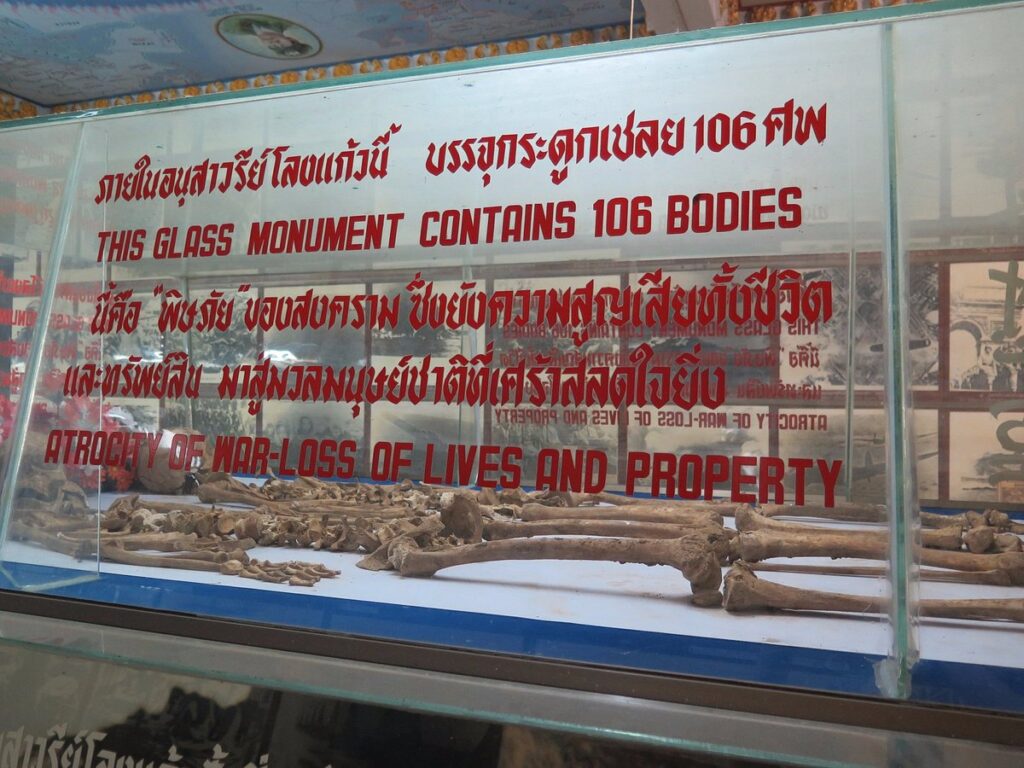
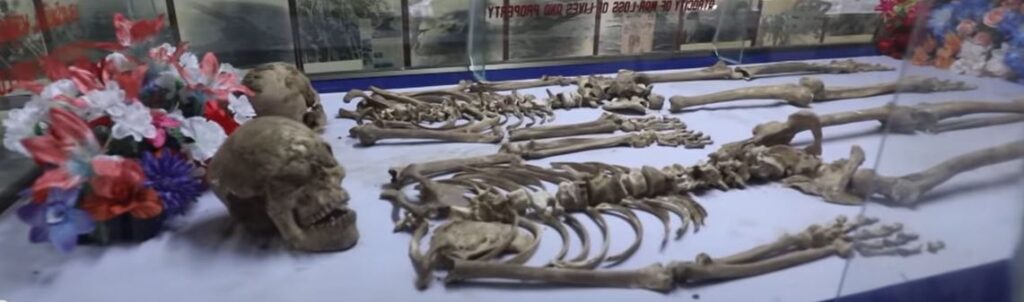
[1] The Paholpolpayuhasena Hospital (named after a revered monk) occupies that space today. In 1943-45 it was the site of the F&H hospital #2.
[2] Thought to be that of a teenaged girl.
[3] There is a remembrance ceremony during Qingming every year.
[4] Their current location has been lost as all the participants are deceased.
[5] This is not to be confused with the original JEATH museum operated by the monks of Wat Chaichumpon-Chanasongkram.
[6] Unfortunately, these are among only a few items in this ‘museum’ that directly relate to the Thai-Burma Railway or even WW2.